Research Statement
My scholarly journey in medical and healthcare education began not from a textbook, but from a question I could not ignore. Reports of extreme academic pressure, institutionalised bullying, and student suicide within Indonesian medical schools confronted me with a systemic problem that demanded rigorous, evidence-based inquiry.
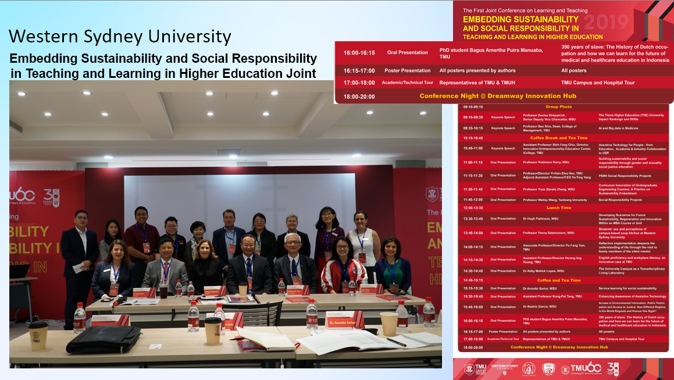
My initial inquiry took shape through a critical historical lens. Invited to present at the joint symposium Embedding Sustainability and Social Responsibility in Teaching and Learning in Higher Education, I argued that the hierarchical, high-pressure culture embedded in Indonesian medical education is inseparable from the legacy of 350 years of Dutch colonial rule. This early work established my conviction that understanding educational failure demands engagement with history, culture, and power — not merely didactic methodology.
Building on these questions, I pursued doctoral training at Taipei Medical University (TMU), one of Asia's leading institutions in healthcare education research. My original doctoral project was a three-country comparative study examining how Readiness Assessment Tests (RAT) function within Problem-Based Learning (PBL) frameworks across Taipei Medical University (Taiwan), Udayana University (Indonesia), and the University of Medicine and Pharmacy Ho Chi Minh City (Vietnam) — directly extending the critical argument advanced in Sydney.
The COVID-19 pandemic fundamentally disrupted multi-site data collection in 2020–2021. Rather than abandoning the project, I pivoted methodologically, conducting a rigorous meta-analysis of PBL effectiveness across the existing international literature. The result was a flagship publication:
This meta-analysis demonstrated that PBL consistently improves critical thinking and self-directed learning outcomes — but that its effect size is substantially moderated by institutional culture, facilitator training, and curriculum alignment.
Returning to Udayana University as a faculty member, I secured the INSPIRE grant — the highest-tier research award offered by Udayana University — enabling a landmark multi-country longitudinal study on emotional and psychological dimensions of medical student performance.
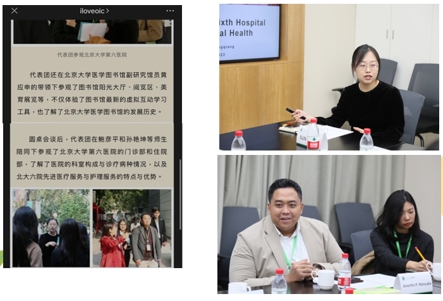
Under this grant, I travelled to Beijing to conduct data collection at the Peking University Health Science Center (PKUHSC) — one of China's most prestigious academic medical institutions — resulting in the formal signing of a Memorandum of Agreement for international research collaboration between Udayana University and PKUHSC.
The research project "Emotional Intelligence, Perceived Stress, and Academic Performance of Medical Students: A Multi-Year and Multi-Country Comparison" collected longitudinal data across four cohort years from medical students at both institutions. Key findings:
- Stress levels peak significantly in Year 3, not Year 1 as commonly assumed
- Emotionality dimension of Trait EI declines sharply between Years 1 and 2 — a critical developmental window
- Academic performance trajectories differ meaningfully between Indonesian and Chinese student cohorts
- Well-being and self-control dimensions of EI predict academic resilience across both national contexts
My research trajectory has moved from critical-historical framing → methodological rigour (meta-analysis) → cross-national empirical research (Indonesia–China). The natural next frontier is engagement with Japan's highly developed medical education ecosystem, where I seek to examine how cultural, regulatory, and pedagogical factors interact to shape medical student outcomes in a high-performance Asian context simultaneously distinct from both the Western canon and the Indonesian/Chinese experience I have studied.
- Self-regulated learning and psychological readiness in structured clinical training environments
- Assessment design — OSCE feedback mechanisms and their cultural transferability across Asia
- Interprofessional education (IPE) models and their implementation in Japanese healthcare contexts
- Comparative analysis of medical student wellbeing and burnout across Asia-Pacific systems
Publications
-
01
The Relationship Between Comprehensive OSCE Scores and GPA on the Readiness of Undergraduate Medical Students to Undergo Clinical RotationsMalaysian Journal of Medical Sciences, 32(3), 109–1192025
-
02
Students' Perceptions on the Implementation of the First Biomedical Block: A Study Among First-Year Medical Students at Udayana UniversityIndonesian Journal of Biomedical Science, 19(1), 1–52025
-
03
Building Resilience Through Self-Regulated Learning: Addressing Academic Stress in Medical SchoolIndonesian Journal of Biomedical Science, 18(2), 270–2762024
-
04
Comparison of Self-Control and Sociability Capability of Medical Students: A Multi-Year Study in Bali, IndonesiaBali Medical Journal, 13(2), 958–9612024
-
05
The Association Between Types of Admission Selection and Academic Achievement of First-Year Medical StudentsBali Medical Journal, 13(2), 866–8702024
-
06
Factors Influencing Readiness and Perceptions of Interprofessional Education (IPE) ImplementationBali Medical Journal, 13(1), 361–3662024
-
07
The Impact of the COVID-19 Pandemic on Medical Students' Readiness for Clinical RotationIndonesian Journal of Biomedical Science, 17(1), 1–62023
-
08
Evaluation of the Implementation of Objective Structured Clinical Examination (OSCE): A Literature ReviewBali Medical Journal, 12(1), 1163–11662023
-
09
Levels of Anxiety and Depression of Students and Responses to Online Learning Methods During the COVID-19 PandemicBali Medical Journal, 12(1), 545–5492023
-
10
The effectiveness of problem-based learning in improving critical thinking, problem-solving and self-directed learning in first-year medical students: A meta-analysisPLOS ONE, 17(11), e0277339Q1 2022
Conference Presentations
-
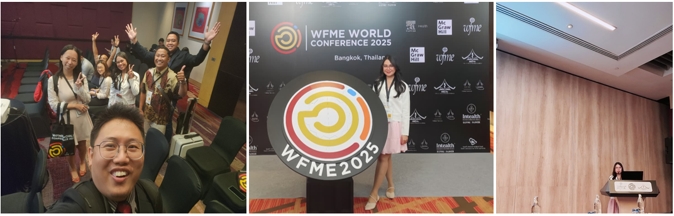
2025Oral Research PaperWFME World ConferenceWorld Federation for Medical Education · Bangkok, Thailand"The Association of Emotional Intelligence, Perceived Stress, and Academic Performance of the Medical Student in Bali, Indonesia: A Multi-Year Comparison Study" [ID: 5PM0QZDARG]
-
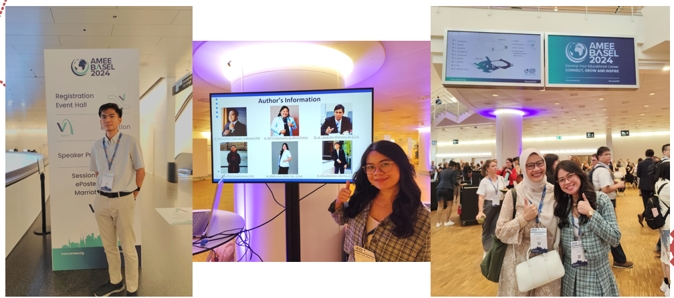
2024Poster PresentationAMEE Annual ConferenceAssociation for Medical Education in Europe · Basel, Switzerland"Emotional Intelligence, Perceived Stress, and Academic Performance of Medical Students: A Multi-Year and Multi-Country Comparison"
-
2018Invited TalkEmbedding Sustainability in Higher EducationWestern Sydney University · Sydney, Australia"350 Years of Slave: The History of Dutch Occupation and How We Can Learn for the Future of Medical and Healthcare Education in Indonesia"
Teaching & Academic Activities
Teaching
Academic Activities